





Past Winners
Among the many distinguished recipients of the Wiley Prize in Biomedical Sciences, these have gone on to be awarded some of the most prestiguous awards in science.
*Nobel Prize. † Albert Lasker Basic Medical Research Award.A full list of Nobel and Albert Lasker Award winners can be found here
| 2021 | ||
|---|---|---|
|
Dr. Clifford Brangwynne
|
|
Dr. Michael Rosen
|
|
The 2021 annual Wiley Prize in Biomedical Sciences was awarded to Clifford Brangwynne, Anthony Hyman, and Michael Rosen for revealing a new principle for subcellular compartmentalization based on formation of phase-separated biomolecular condensates, a process implicated in both physiological and pathological events. |
||
|
2020 |
||
|
The 2020 annual Wiley Prize in Biomedical Sciences was delayed due to complications from the COVID pandemic. |
||


| 2019 | |
|---|---|

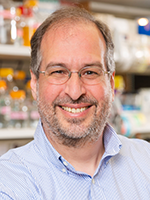
Dr.Svante Pääbo |
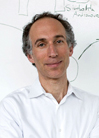
Dr. David Reich |
|
The 2019 annual Wiley Prize in Biomedical Sciences was awarded to Svante Pääbo and David Reich for sequencing the genomes of ancient humans and extinct relatives, revealing the origin and ancestry of contemporary humans and our diverse populations. |
|
| 2018 | |
|---|---|
|
Dr. Lynne MaquatThe 2018 annual Wiley Prize in Biomedical Sciences was awarded to Lynne Maquat for elucidating the mechanism of nonsense-mediated messenger RNA decay, a fundamental process whereby cells remove defective transcripts that can encode toxic proteins. |
|

| 2017 | |
|---|---|
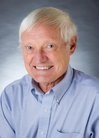
Dr. Joachim Frank* |

Dr. Marin van Heel |

Dr. Richard Henderson* |
|
|
The 2017 annual Wiley Prize in Biomedical Sciences was awarded to Joachim Frank, Richard Henderson, and Marin van Heel for pioneering developments in electron microscopy that are transforming structural studies of biological molecules and their complexes. |
|
| 2016 | |
|---|---|
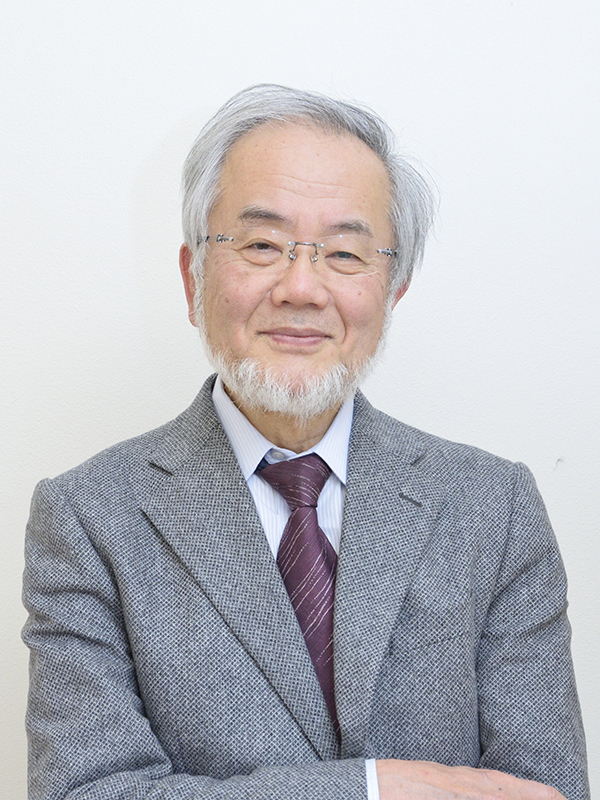
Dr.Yoshinori Ohsumi* |
|
|
The 2016 Wiley Prize in Biomedical Sciences was awarded to Yoshinori Ohsumi for his studies of autophagy--the discovery of how cells recycle their components in an orderly manner. Dr. Ohsumi was awarded the 2016 Nobel Prize in Physiology and Medicine. Award ceremony lectures and presentations |
|
| 2015 | |
|---|---|
Dr. Evelyn M. Witkin† |
Dr. Stephen Elledge† |
|
The 2015 Wiley Prize in Biomedical Sciences was awarded to Evelyn M. Witkin and Stephen Elledge for their studies of the DNA damage response. Award ceremony lectures and presentations |
|
| 2014 | |
|---|---|

Dr. William Kaelin† |

Dr. Stephen McKnight |

Dr. Peter Ratcliffe† |

Dr. Gregg L. Semenza† |
|
The 2014 Wiley Prize in Biomedical Sciences was awarded to William G. Kaelin, Jr., Steven McKnight, Peter J. Ratcliffe, and Gregg L. Semenza for their work in oxygen sensing systems. |
|
| 2013 | |

Dr. Michael Young*Rockefeller University
|

Dr. Jeffrey Hall*Brandeis University (Emeritus)
|

Dr. Michael Rosbash*Brandeis University
|
|
|
The 2013 Wiley Prize in Biomedical Sciences was awarded to Dr. Michael Young (interview), Dr. Jeffrey Hall (interview), and Dr. Michael Rosbash (interview) for the discovery of the molecular mechanisms governing circadian rhythms. |
|
| 2012 | |

James Spudich†Stanford University
|

Dr. Michael Sheetz†Columbia University
|

Dr. Ronald Vale†University of California, San Francisco
|
|
|
The 2012 Wiley Prize in Biomedical Sciences was awarded to Dr. James Spudich, Dr. Michael Sheetz, and Dr. Ronald Vale for explaining how cargo is moved by molecular motors along two different systems of tracks within cells. Dr. Spudich's award ceremony PowerPoint presentation . |
|
| 2011 | |
Dr. Lily Jan and Dr. Yuh Nung JanUniversity California, San Francisco
|
|
|
The 2011 Wiley Prize in Biomedical Sciences was awarded to Dr. Lily Jan and Dr. Yuh Nung Jan for their molecular identification of a founding member of a family of potassium ion channels that control nerve cell activity throughout the animal kingdom |
|
| 2010 | |

Dr. Peter HegemannHumboldt University, Berlin.
|

Dr. Georg NagelUniversity of Wuerzburg
|

Dr. Ernst BambergMax-Planck Institute of Biophysics, Frankfurt, Germany
|
|
|
The 2010 Wiley Prize in Biomedical Sciences was awarded to Dr. Hegemann, Dr. Nagel, and Dr. Bamberg for their discovery of channelrhodopsins, a family of light-activated ion channels. |
|
| 2009 | |

Dr. Bonnie BasslerPrinceton University
|
|
|
The 2009 Wiley Prize in Biomedical Sciences was awarded to Dr. Bonnie Bassler for pioneering investigations of quorum sensing, a mechanism that allows bacteria to "talk" to each other to coordinate their behavior, even between species. |
|
| 2008 | |

Dr. Richard P. LiftonYale University School of Medicine
|
|
|
The 2008 Wiley Prize in Biomedical Sciences was awarded to Dr. Richard P. Lifton for his discovery of the genes that cause many forms of high and low blood pressure in humans. |
|
| 2007 | |

Dr. F. Ulrich Hartl†Max-Planck Institute of Biochemistry
|

Dr. Arthur L. Horwich†Yale University School of MedicineHoward Hughes Medical Institute
|
|
The 2007 Wiley Prize in Biomedical Sciences was awarded to Dr. F. Ulrich Hartl and Dr. Arthur L. Horwich for their elucidation of the molecular machinery that guides proteins into their proper functional shape, thereby preventing the accumulation of protein aggregates that underlie many diseases, including Alzheimer's and Parkinson's. |
|
| 2006 | |

Dr. Elizabeth H. Blackburn*†University of California, San Francisco
|

Dr. Carol W. Greider*†The Johns Hopkins University
|
|
The 2006 Wiley Prize in Biomedical Sciences was awarded to Dr. Elizabeth H. Blackburn and Dr. Carol Greider for their discovery of telomerase, the enzyme that maintains chromosomal integrity and the recognition of its importance in aging, cancer, and stem cell biology. |
|
| 2005 | |

Dr. Peter Walter†University of California, San Francisco
|

Dr. Kazutoshi Mori†Kyoto University, Japan
|
|
The 2005 Wiley Prize in Biomedical Sciences was awarded to Dr. Peter Walter and Dr. Kazutoshi Mori for their discovery of the novel pathway by which cells regulate the capacity of their intracellular compartments to produce correctly folded proteins for export. |
|
| 2004 | |

C. David Allis, Ph.D.The Rockefeller University
|
|
|
The 2004 Wiley Prize in the Biomedical Sciences was awarded to Dr. C. David Allis for his significant discovery that transcription factors can enzymatically modify histones to regulate gene activity. In 2014 David Allis, a pioneer in the field of epigenetics whose discovery that chemical modifications of DNA-packaging proteins play a key role in regulating the activity of individual genes, was awarded the 2014 Japan Prize in Life Sciences. |
|
| 2003 | |

Dr. Andrew Z. Fire*Carnegie Institution of Washington and the Johns Hopkins University
|

Dr. Craig C. Mello*University of Massachusetts Medical School
|

Dr. Thomas TuschlThe Rockefeller University
|

Dr. David Baulcombe†Sainsbury Laboratory at the John Innes Centre
|
|
The 2003 Wiley Prize in Biomedical Sciences was awarded to Dr. Andrew Z. Fire, Dr. Craig C. Mello, Dr. Thomas Tuschl and Dr. David Baulcombe for their respective contributions to discoveries of novel mechanisms for regulating gene expression by small interfering RNAs (siRNA). |
|
| 2002 | |

Dr. H. Robert Horvitz*Massachusetts Institute of Technology
|

Dr. Stanley J. KorsmeyerDana Farber Cancer Institute
|
|
The 2002 Wiley Prize in the Biomedical Sciences was awarded to Dr. H. Robert Horvitz and Dr. Stanley J. Korsmeyer Dr. Horvitz was selected for his seminal research on programmed cell death and the discovery that a genetic pathway accounts for the programmed cell death within an organism, and Dr. Korsmeyer was chosen for his discovery of the relationship between human lymphomas and the fundamental biological process of apoptosis. Notably, Dr. Korsmeyer's experiments established that blocking cell death plays a primary role in cancer. |
|